Ganesh Chaturthi Outfit Ideas & Style Guide
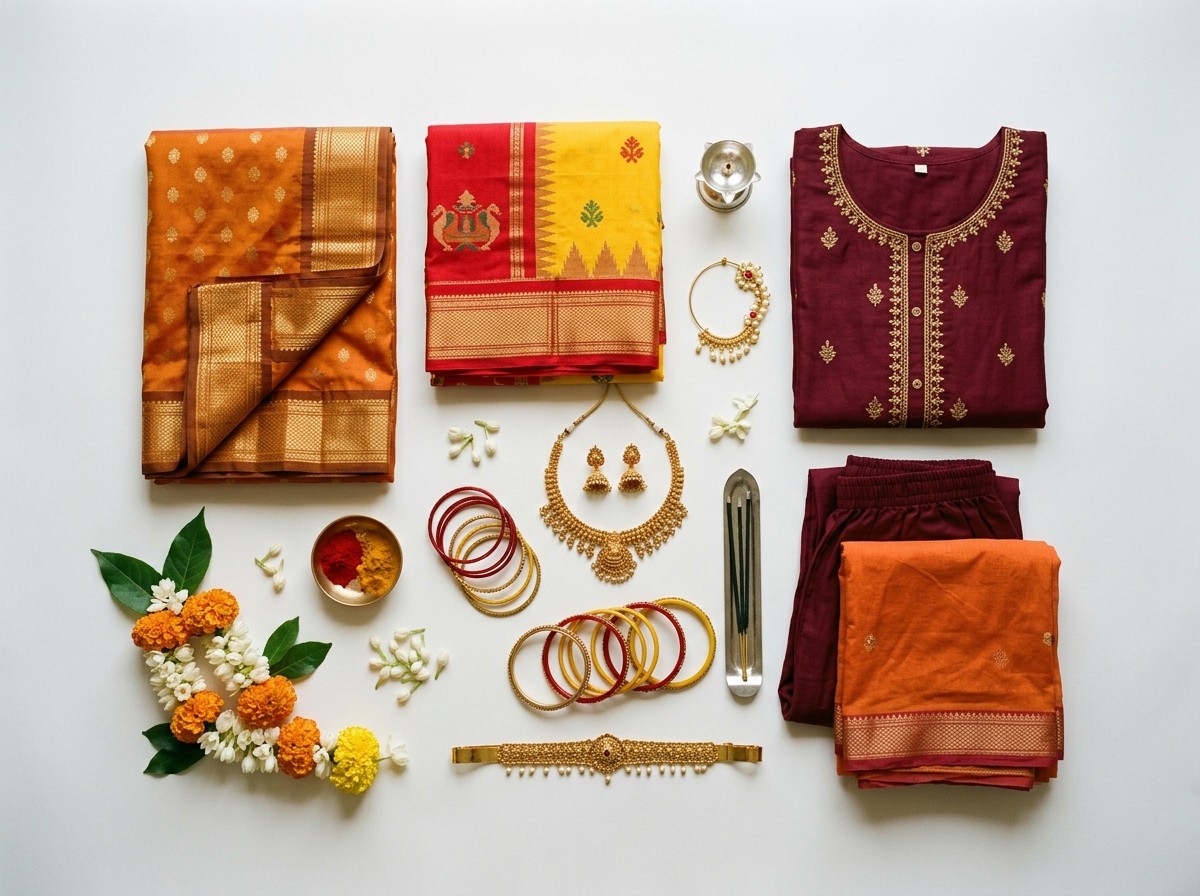
Recommended Festive Attire
Traditional festive wear: kurtas, nauvari or silk sarees; saffron, yellow, red.
About Ganesh Chaturthi and what people wear
Ganesh Chaturthi marks the birth of Lord Ganesha, celebrated with home and public idol installations, processions and immersion ceremonies. Clothing is part of the devotion: families dress in fresh traditional wear for morning puja, visiting pandals, and joining the final visarjan processions. What people wear signals festivity and respect, with many choosing ethnic garments over everyday clothes for the full ten days, especially on the first and last.
Colours
Saffron represents sacredness and is strongly tied to Ganesha worship. Yellow and red are festive and auspicious, often seen in sarees, kurtas and floral jewellery. Many also wear orange, maroon or gold-accented fabrics, especially during aarti and visarjan. Deep, rich tones are generally favoured over pastels, reflecting the energetic, communal mood of pandal visits and street processions.
Fabrics and fit
Cotton and cotton-silk blends suit the warm, often humid early-September weather, especially during long pandal queues or processions. Silk sarees and brocade kurtas are common for puja mornings and family gatherings, while lighter cotton kurtas or salwar suits work better for outdoor visarjan walks. Loose, breathable silhouettes help with standing, bending for aarti and dancing during immersion processions through crowded streets.
Outfit ideas for women
Many women wear nauvari (nine-yard) sarees, especially in Maharashtra, paired with nath nose rings and traditional jewellery for a classic look. Silk or cotton-silk sarees in saffron, yellow or red are popular for puja days. For comfort during processions, salwar kameez or anarkali suits in festive colours work well, often finished with bangles, bindis and jasmine flowers in the hair.
Outfit ideas for men
Men commonly wear kurta-pyjama sets in saffron, white or yellow, sometimes paired with a Nehru jacket for puja gatherings. A traditional pheta (turban), especially in Maharashtra, is worn during processions and visarjan for a festive, regional touch. For practicality during long outdoor events, simple cotton kurtas with pyjamas or dhotis are a comfortable, widely worn choice.
Dress etiquette
- Dress modestly and avoid overly revealing outfits when visiting pandals or joining processions.
- Remove footwear before entering home shrines or temple pandals, as is customary.
- Avoid wearing black on puja days, as many consider it inauspicious for the occasion.
- If joining immersion processions, choose older or washable festive wear, as clothes may get wet or dusty.
Practical tips
Early September in Maharashtra, Goa and Karnataka is typically warm and humid, often with monsoon showers. Choose breathable cotton or cotton-silk fabrics, comfortable footwear for walking or standing, and carry a light shawl or umbrella for sudden rain. Immersion processions involve crowds and water, so avoid delicate fabrics or anything you'd mind getting damp.
Regional notes
Maharashtra favours nauvari sarees and phetas with vibrant processions, Goa blends Konkani styles with similar saffron and red tones, while Karnataka's celebrations lean toward silk sarees and more understated jewellery. Across regions, the core idea remains festive traditional wear in warm, auspicious colours suited to puja and procession.
Frequently Asked Questions
What should I wear for Ganesh Chaturthi?
Traditional festive wear: kurtas, nauvari or silk sarees; saffron, yellow, red.
Can I try on festive outfits before buying?
Yes! Snap a photo, upload one, or paste any product URL from online retailers — GetHyped previews the look on yourself with photorealistic AI virtual try-on.
Preview your Ganesh Chaturthi look with GetHyped
Try on festive wear on your own photo before ordering — 100% free to start.
GetHyped also tracks cultural dates in Today's Pick — explore all features.