Bohag Bihu Outfit Ideas & Style Guide
 Trending Now
Luminous Muga silk and modern red-and-cream Mekhela Chadors define Bihu style
Traditional handwoven Muga and Pat silk garments paired with vibrant red accents and contemporary lightweight silhouettes are trending for celebrating the Assamese New Year.
via Aza Editorials
Recommended Festive Attire
Assamese traditional wear: mekhela chador (muga or pat silk), dhoti-kurta with a gamosa.
About Bohag Bihu and what people wear
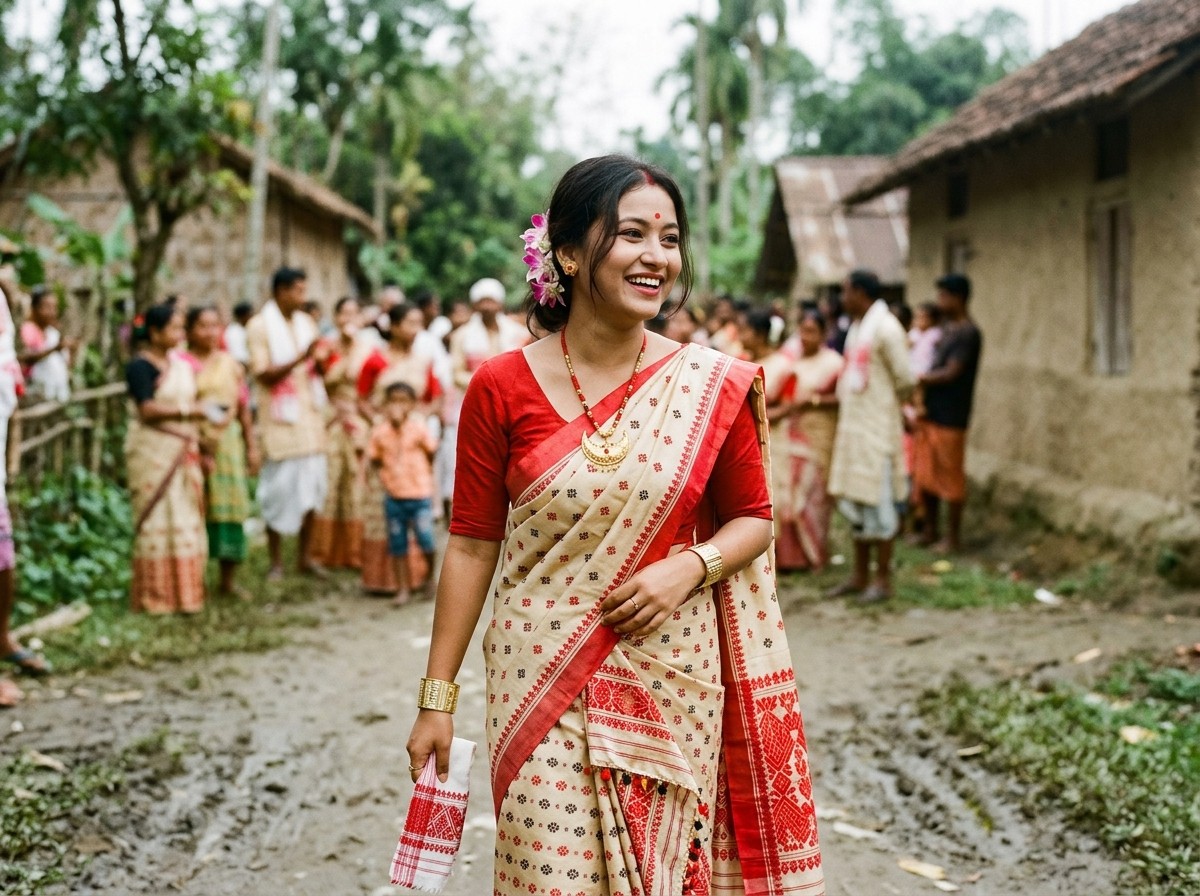
Bohag Bihu marks the Assamese New Year and the start of the agricultural sowing season, celebrated with Husori singing, Bihu dance and community feasts. Clothing is central to the celebration because traditional handwoven textiles, especially muga and pat silk, represent Assam's weaving heritage and are worn with pride during performances, family gatherings and temple visits, tying personal dress to cultural identity and the land's seasonal renewal.
Colours
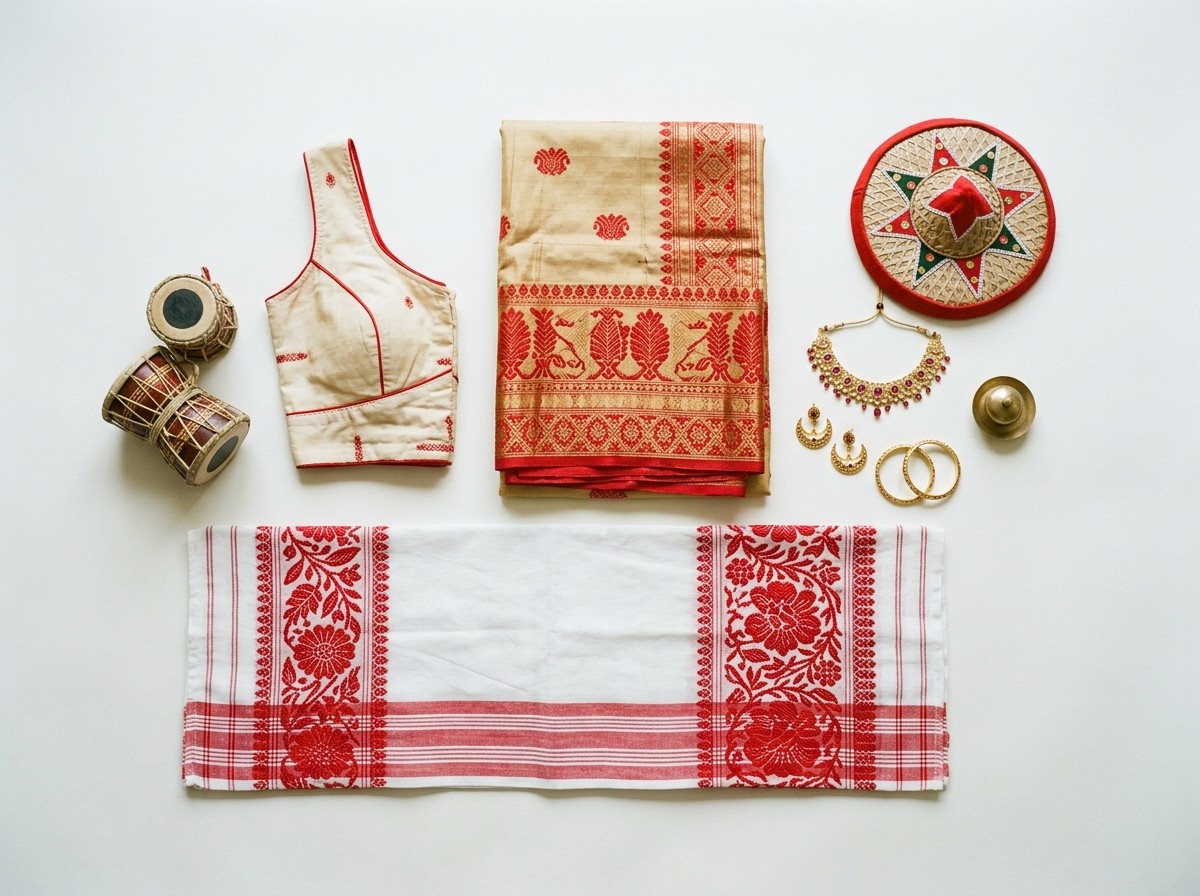
White and red dominate, seen in the gamosa, a handwoven cotton cloth with red woven borders that symbolises respect, purity and Assamese identity. Golden-hued muga silk, unique to Assam, is prized for its natural sheen and durability. These colours and textures are less about symbolic meaning and more about showcasing regional craftsmanship and heritage weaving.
Fabrics and fit
Warm spring weather calls for breathable natural fibres. Muga and pat silk are favoured for their lightness and lustre, while cotton gamosas and lighter cotton blouses suit daytime events. Silhouettes stay traditional and unstructured, mekhela chador for women and dhoti-kurta for men, allowing ease of movement for Bihu dance performances and outdoor gatherings without heavy layering.
Outfit ideas for women
The mekhela chador remains the signature look, a two-piece draped silk garment often in muga gold or cream with red woven motifs, paired with a fitted blouse. Modern takes include pat silk in softer pastel shades or contemporary blouse cuts. A gamosa may be draped over the shoulder, and traditional jewellery like gold-plated Assamese sets complements the outfit.
Outfit ideas for men
Men typically wear a dhoti paired with a kurta, often in white or cream silk or cotton, with a gamosa tied around the neck, waist or head as a mark of respect. Some opt for a chapkan or simple kurta-pyjama for comfort during Husori processions, while younger men may pair a kurta with trousers for a more modern, relaxed take.
Dress etiquette
- Wear or carry a gamosa if attending community functions, as it is treated as a mark of respect and honour.
- Avoid overly flashy or synthetic fabrics for formal or ceremonial moments; handwoven silk and cotton are preferred.
- When offering a gamosa to elders or guests, present it with both hands as a gesture of courtesy.
- Dress modestly and comfortably for Bihu dance gatherings since movement and bending are part of the performance.
Practical tips
Mid-April in Assam brings warm, humid weather, so lightweight silk or cotton garments work best for daylong celebrations. Comfortable footwear is useful given outdoor dancing and walking between homes for feasting. Carrying a spare gamosa is practical, as it doubles as a scarf, headwear or wipe during the heat.
Regional notes
Dress styles vary slightly across Assam's districts, with Upper Assam favouring richer muga silk weaves and Lower Assam often using more cotton and pat silk blends, though the mekhela chador and gamosa remain consistent symbols throughout the state.
Frequently Asked Questions
What should I wear for Bohag Bihu?
Assamese traditional wear: mekhela chador (muga or pat silk), dhoti-kurta with a gamosa.
Can I try on festive outfits before buying?
Yes! Snap a photo, upload one, or paste any product URL from online retailers — GetHyped previews the look on yourself with photorealistic AI virtual try-on.
Preview your Bohag Bihu look with GetHyped
Try on festive wear on your own photo before ordering — 100% free to start.
GetHyped also tracks cultural dates in Today's Pick — explore all features.