Baisakhi Outfit Ideas & Style Guide
 Trending Now
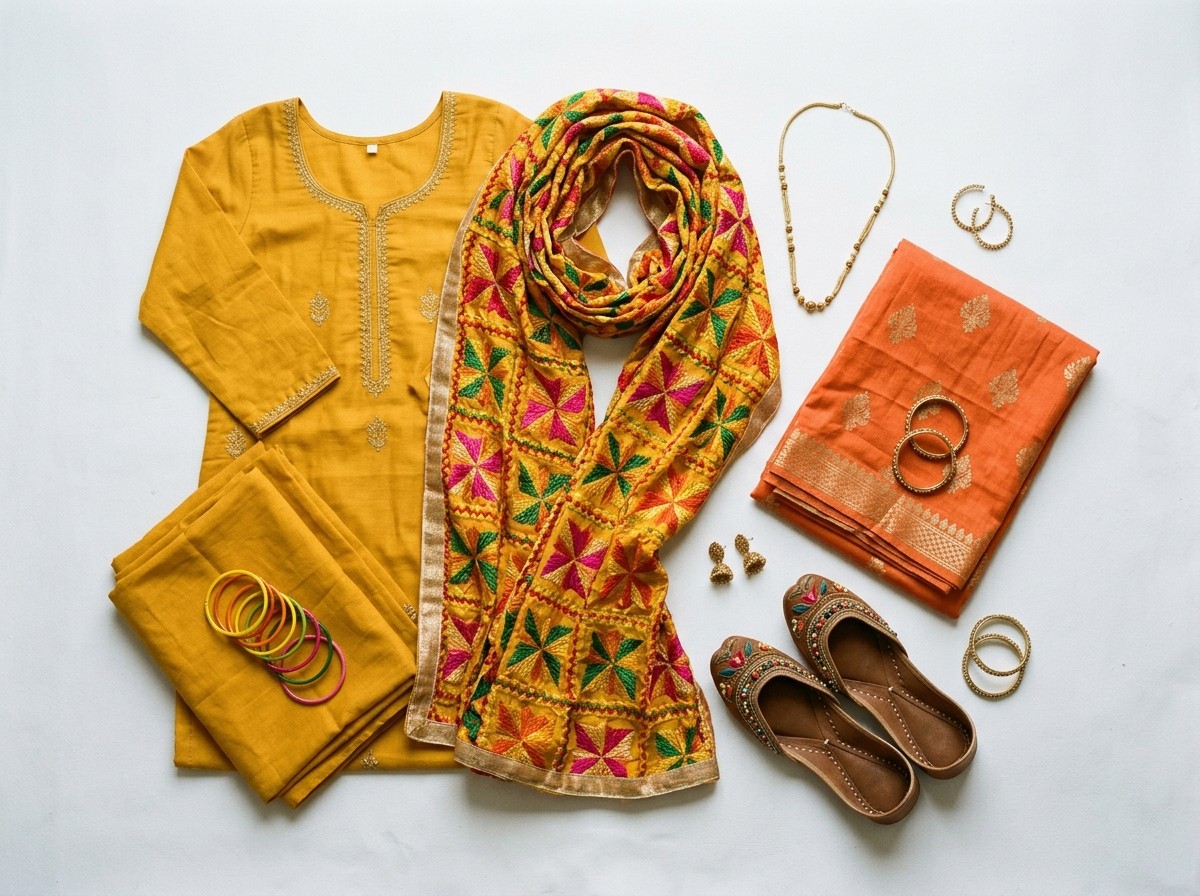
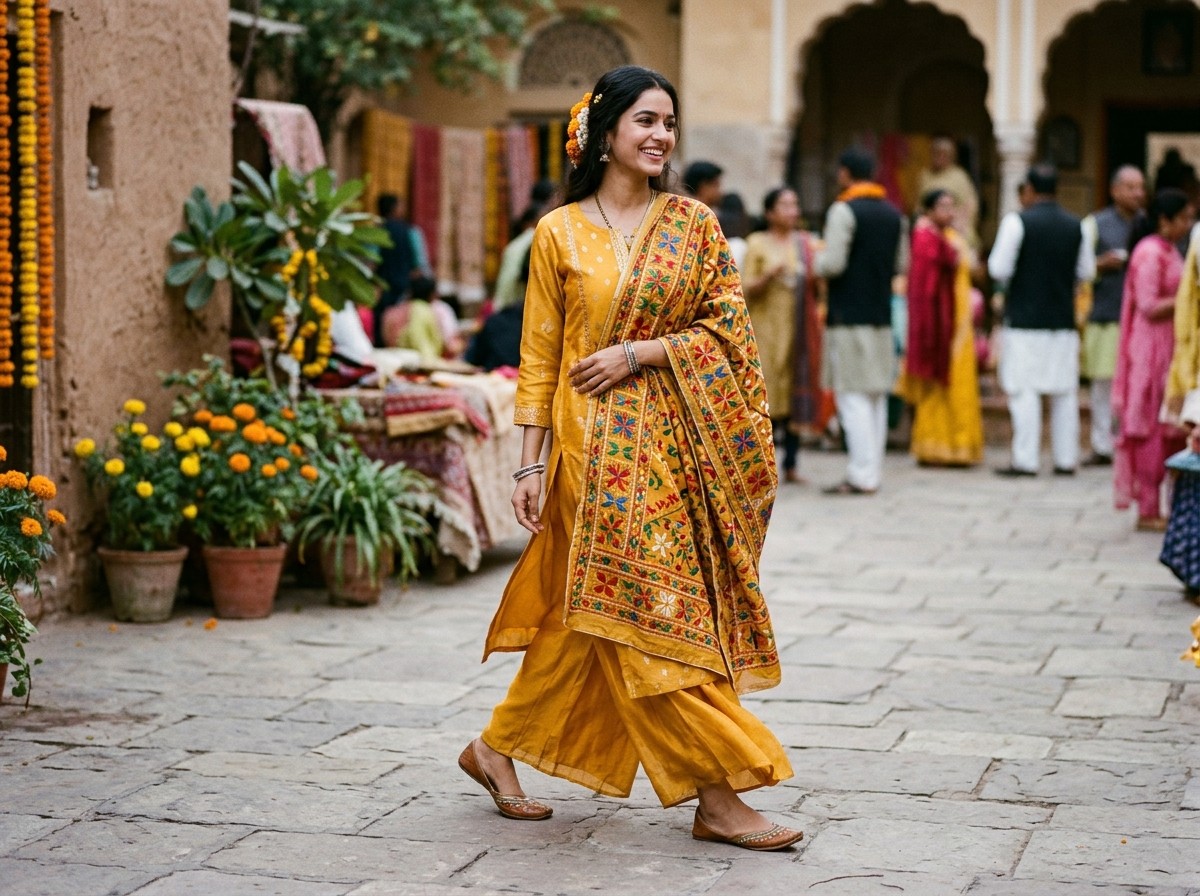
Mustard yellow Chanderi Anarkalis and diagonal-wrap Angrakhas.
Breathable fabrics like cotton-silk and Chanderi in vibrant harvest shades dominate Baisakhi wardrobes, paired with traditional juttis and oxidized silver jhumkas.
via Anvi Couture
Recommended Festive Attire
Punjabi festive wear: bright kurtas, salwar suits, phulkari; yellows and oranges.
About Baisakhi and what people wear
Baisakhi marks the spring harvest in Punjab and, for Sikhs, the founding of the Khalsa. Villages and gurdwaras come alive with bhangra, giddha and processions, and clothing is part of the celebration itself. Bright, festive dress signals joy and renewal, mirrors the ripened mustard and wheat fields, and lets people move freely through dancing, folk games and community gatherings.
Colours
Yellow dominates, echoing mustard crops and symbolising prosperity, energy and the arrival of spring. Orange and saffron are also common, linked to courage and the Khalsa's founding, often seen in turbans and dupattas. Deep pinks, reds and greens appear too, giving the festival its characteristically vivid, multicoloured look rather than a single strict palette.
Fabrics and fit
Lightweight cotton and cotton-blend fabrics suit the warm early-summer weather and the energetic dancing involved in bhangra and giddha. Phulkari embroidery, done on cotton or silk-blend dupattas and shawls, adds texture and colour without weighing an outfit down. Silhouettes stay loose and flowing, salwar suits and flared kurtas, so there's room to move during folk performances and processions.
Outfit ideas for women
Many women wear salwar suits or long kurtas paired with a phulkari dupatta, the embroidered shawl being one of the day's signature pieces. Bright yellow or orange cotton sets are popular, sometimes finished with juttis and simple gold jewellery. Modern takes include anarkali-style kurtas or lighter palazzo suits, keeping the festive colours while trading heavier fabrics for something easier to dance in.
Outfit ideas for men
Kurta-pyjama in yellow, orange or white cotton is a classic choice, often worn with a bright turban that becomes a focal point of the outfit. Some men add a phulkari-patterned jacket or stole for extra colour. Younger crowds sometimes pair a simple kurta with jeans, keeping the turban or a saffron stole as the clear nod to the occasion.
Dress etiquette
- Cover your head with a scarf or cloth before entering a gurdwara, regardless of gender.
- Remove shoes before stepping into the gurdwara hall, as is standard at any Sikh place of worship.
- Avoid leather items like belts or bags inside the gurdwara as a mark of respect.
- Choose bright, modest festive wear for processions rather than anything overly revealing or dark and sombre.
Practical tips
Early April in Punjab and Haryana is typically warm and dry during the day, so breathable cotton is more comfortable than heavier fabrics. Flat juttis or sandals work better than heels for standing through processions and joining in bhangra. Carry a light dupatta or scarf that doubles as a head covering for gurdwara visits.
Regional notes
In practice, the bright kurta, salwar suit and phulkari look described holds fairly consistently across Punjab, Haryana and Chandigarh, with local variation mostly in how elaborate the phulkari embroidery or turban styling becomes, rather than in the overall colours or garments chosen.
Frequently Asked Questions
What should I wear for Baisakhi?
Punjabi festive wear: bright kurtas, salwar suits, phulkari; yellows and oranges.
Can I try on festive outfits before buying?
Yes! Snap a photo, upload one, or paste any product URL from online retailers — GetHyped previews the look on yourself with photorealistic AI virtual try-on.
Preview your Baisakhi look with GetHyped
Try on festive wear on your own photo before ordering — 100% free to start.
GetHyped also tracks cultural dates in Today's Pick — explore all features.